Chamados do eletricista: 20 defeitos, o que medir e quanto cobrar - Vifalio Skip to content

Chamados do eletricista: 20 defeitos, o que medir e quanto cobrar

Anúncios

O telefone toca: “metade da casa apagou”, “o GFCI não rearma”, “a tomada está quente”. Para o eletricista que atende residência nos Estados Unidos, o dia é feito desses chamados. Este guia grátis junta os vinte mais comuns num lugar só: o que costuma ser, o que medir primeiro, o conserto de sempre, quanto tempo leva e quanto se cobra.

Ir para o download do guia grátis
Guia dos 20 chamados do eletricista: o que medir, conserto, tempo e preço, em inglês

O guia está em inglês e tem onze páginas. Aqui você vê o método de cinco passos, as leituras normais do multímetro e a lista dos vinte chamados com tempo e preço. O PDF para baixar fica no topo da página seguinte.

Anúncios

Por que chamado de serviço dá dinheiro

Obra nova depende de projeto, licença e cronograma. O chamado de serviço é diferente: o cliente tem um problema hoje, quer resolver hoje e paga a visita. Quem acha o defeito rápido fecha mais chamados por dia, e quem explica bem o que achou ganha o cliente para o próximo serviço. O segredo é sempre seguir a mesma ordem, em vez de sair abrindo caixa por caixa.

O método de cinco passos

Vale para os vinte chamados. Os dois primeiros passos resolvem uma boa parte deles sem ferramenta nenhuma, porque muita tomada morta é só um GFCI desarmado em outro cômodo.

Anúncios

PassoO que fazer
1. PERGUNTARQuando começou? O que estava ligado? Teve obra, tempestade ou aparelho novo?
2. OLHARQuadro, todos os GFCI, marcas de queimado, cheiro, água. Muitos chamados terminam aqui.
3. MEDIRVivo-morto-vivo: teste o multímetro numa fonte boa, meça, teste de novo na fonte boa.
4. ISOLARTire as cargas, abra o circuito no meio, desligue o LOAD.
5. CONSERTAR E PROVARConserte, meça de novo, mostre ao cliente e anote na ficha.
StepWhat to do
1. ASKWhen did it start? What was running? Any recent work, storm or new appliance?
2. LOOKPanel, every GFCI, scorch marks, smell, water. Most calls end here.
3. MEASURELive-dead-live: test the meter on a known source, test, test again.
4. ISOLATEUnplug loads, open the circuit at a midpoint, disconnect LOAD.
5. FIX + PROVERepair, retest with the meter, show the client, write it on the ticket.

Vivo-morto-vivo, sempre

O detector de tensão sem contato ajuda a achar o circuito, mas sozinho não prova que o fio está desligado. Teste o multímetro numa fonte que você sabe que está ligada, meça o ponto em que vai trabalhar e volte a testar na fonte boa. Se o aparelho falhou no meio do caminho, você descobre antes de encostar no fio.

Como é uma leitura normal

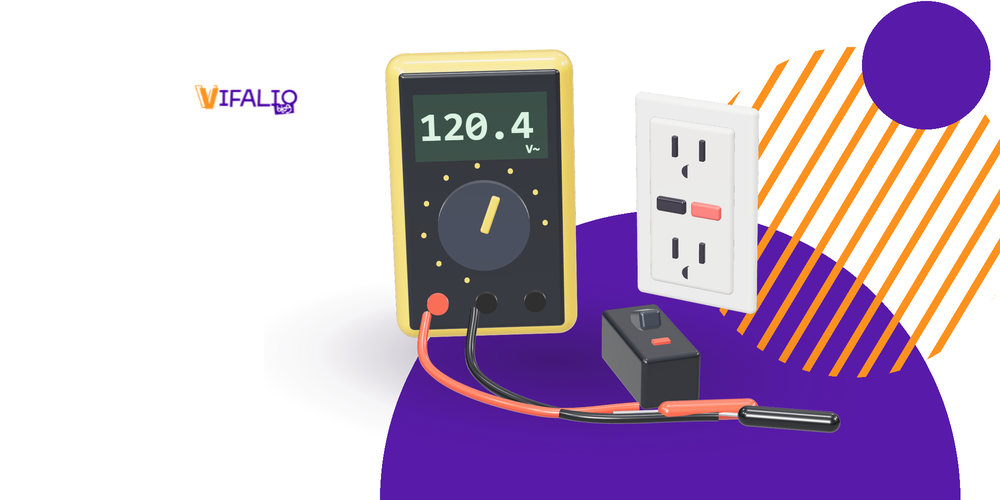
Antes de abrir qualquer coisa, compare o que o multímetro mostra com estes valores de uma casa americana típica. Leitura fora da faixa é a primeira pista.

TesteNormalObservação
Tomada 120 V, fase-neutro114 – 126 VFaixa A da ANSI C84.1 para 120 V
Fase-terraigual à fase-neutroPerto de 0 V = sem terra
Neutro-terraabaixo de 2 VMais que isso com carga = neutro frouxo ou longo
240 V, L1-L2228 – 252 VFaixa A da ANSI C84.1 para 240 V
L1-N contra L2-Nas duas 114 – 126 VUma sobe e a outra desce com carga = problema no neutro
Interruptor fechado / fusível bomperto de 0 ohmOL = aberto
Transformador da campainha10 – 24 V AC16 V é o mais comum
Resistência do aquecedor (240 V)4500 W = 12.8 ohms3500 W = 16.5 ohms
Carga contínua (regra dos 80%)12 A / 16 AEm disjuntor de 15 A / 20 A
TestNormalNotes
120 V outlet, hot-neutral114 – 126 VANSI C84.1 Range A for 120 V
Hot-groundsame as hot-neutralAbout 0 V = no ground
Neutral-groundunder 2 VHigher under load = loose or long neutral
240 V, L1-L2228 – 252 VANSI C84.1 Range A for 240 V
L1-N vs L2-Nboth 114 – 126 VOne up, one down under load = neutral problem
Closed switch / good fuseabout 0 ohmsOL = open
Doorbell transformer10 – 24 V AC16 V is the most common
Water heater element (240 V)4500 W = 12.8 ohms3500 W = 16.5 ohms
Continuous load (80% rule)12 A / 16 AOn a 15 A / 20 A breaker

Os vinte chamados mais comuns

A tabela traz a causa que aparece primeiro e a medida que costuma resolver a dúvida. No guia, cada chamado tem um cartão com três causas em ordem, o teste completo, o conserto de sempre e a faixa de tempo e preço.

#ChamadoCausa mais comumO que medir primeiroTempoPreço
1Tomadas mortas num cômodoGFCI desarmado em outro cômodoFase-neutro na tomada; todos os GFCI do circuito0.5 – 1.5 h$100 – $250
2GFCI não rearmaSem energia no LINE ou LINE e LOAD trocadosTensão nos bornes LINE; rearmar com o LOAD desligado0.5 – 1.5 h$120 – $270
3GFCI desarma toda horaÁgua na caixa externaTirar todas as cargas; desligar o LOAD e testar1 – 2.5 h$150 – $350
4Disjuntor desarma depois de um tempoSobrecarga no circuitoAlicate amperímetro na fase com as cargas normais1 – 2 h$150 – $400
5Disjuntor desarma na hora de religarCurto: fio prensado, prego ou parafusoOhms fase-neutro e fase-terra; dividir o circuito1 – 3 h$150 – $450
6AFCI desarmando à toaNeutro encostando no terraIndicador do disjuntor; ohms neutro-terra isolado1 – 3 h$150 – $400
7Uma lâmpada piscaLED que não serve para o dimmerLâmpada boa; lista de LED do dimmer; emendas0.5 – 1 h$100 – $250
8A casa toda escurece ou clareiaNeutro da entrada frouxo ou abertoL1-N e L2-N no quadro com carga grande ligada1 – 2 h$150 – $500
9Metade da casa sem luzPerdeu uma fase da concessionáriaL1-L2 e cada fase ao neutro no geral1 – 2 h$150 – $400
10Tomada quente ou cheiro de queimadoBorne frouxo ou backstabDesligar; plástico derretido, fio escuro, termômetro IR1 – 2 h$150 – $350
11Tomada solta faísca ou não segura o plugueContatos gastosBornes com tudo desligado0.5 – 1 h$100 – $215
12Interruptor não faz nadaLâmpada ou luminária queimadaContinuidade no interruptor; tensão na luminária0.5 – 1 h$100 – $250
13Three-way só funciona de um ladoComum e traveler trocadosAchar o parafuso comum; continuidade ao virar0.5 – 1.5 h$120 – $300
14Ventilador de teto parado ou lentoCapacitor fraco ou chave de correnteTensão nos fios do ventilador; valor do capacitor1 – 2 h$100 – $300
15Campainha mudaTransformador queimadoSaída do transformador; jumper no botão0.5 – 1.5 h$100 – $250
16Detector de fumaça apitandoBateria fraca ou aparelho com mais de 10 anosData no verso; teste em cada um0.5 – 1 h$70 – $150 / unit
17Aquecedor elétrico sem água quenteLimite (ECO) desarmadoResistência em ohms; 240 V no aquecedor1 – 2 h$150 – $450
18Tomada externa ou luz do jardim mortaGFCI desarmado (garagem ou banheiro)Achar o GFCI; água na caixa; timer ou fotocélula0.5 – 1.5 h$120 – $300
19Choquinho em aparelho ou torneiraFalta de terra ou de equipotencializaçãoFase-terra, neutro-terra, polaridade, carcaça-terra1 – 3 h$150 – $500
20Tomada de 3 pinos sem terraFiação antiga de 2 fiosTestador mostra terra aberto; fase-terra perto de 0 V0.5 – 2 h / outlet$50 – $300 / outlet
#CallMost common causeTest firstTimePrice
1Dead outlets in one roomTripped GFCI upstream (bath, garage, kitchen, outdoor)Hot-neutral at the dead outlet (expect about 120 V). Check every GFCI on the circuit, then open the last outlet that still works.0.5 – 1.5 h$100 – $250
2GFCI won’t resetNo power on the LINE sideVoltage at the LINE terminals. Cap the LOAD wires and try again: if it resets now, the fault is downstream.0.5 – 1.5 h$120 – $270
3GFCI keeps trippingWater in an outdoor box or receptacleUnplug everything, reset, add loads one at a time. Then disconnect LOAD and retest; insulation test the downstream run.1 – 2.5 h$150 – $350
4Breaker trips after a whileOverload: too much on one circuitClamp meter on the hot at the panel with the normal loads on. 80% rule: 12 A continuous on 15 A, 16 A on 20 A.1 – 2 h$150 – $400
5Breaker trips the moment you resetShort circuit: pinched wire, nail or screw in a cableBreaker OFF, wires off the breaker. Ohms hot-neutral and hot-ground on the run. Split the circuit at a midpoint to isolate.1 – 3 h$150 – $450
6AFCI nuisance tripsNeutral touching ground somewhereRead the trip indicator if the breaker has one. With the circuit isolated, ohms neutral-ground should read open.1 – 3 h$150 – $400
7One light flickersLoose bulb, or LED not made for that dimmerTry a known good bulb and check the dimmer’s LED list. Power off: open the switch and fixture, inspect every splice.0.5 – 1 h$100 – $250
8Whole house dims, or lights get brighterLoose or open service neutralAt the main, L1-N and L2-N while a big 120 V load runs. One leg going up while the other goes down = neutral problem.1 – 2 h$150 – $500
9Half the house is deadOne leg lost from the utilityAt the main: L1-L2 about 240 V, each leg to neutral about 120 V. A lost leg reads 0 V or low on one side.1 – 2 h$150 – $400
10Hot outlet or switch, burning smellLoose terminal or backstabPower off first. Look for melted plastic and dark insulation; IR thermometer on loaded devices of the same circuit.1 – 2 h$150 – $350
11Outlet sparks or won’t hold a plugWorn contactsA tiny spark when plugging in a load can be normal; scorch marks are not. Check the terminals with power off.0.5 – 1 h$100 – $215
12Switch does nothingDead bulb or fixturePower off: continuity across the switch in ON. Power on: voltage at the switch line terminal and at the fixture.0.5 – 1 h$100 – $250
133-way works from only one sideCommon and traveler swapped at one switchFind the common screw (dark color) on each switch. Power off: continuity common-to-traveler as you flip it.0.5 – 1.5 h$120 – $300
14Ceiling fan dead or slowPull-chain switch failedVoltage at the fan leads; check the wall switch and the receiver; compare the capacitor to its label value.1 – 2 h$100 – $300
15Doorbell is silentTransformer deadTransformer output: usually 10 – 24 V AC (16 V is common). Jumper the button terminals: the chime should ring.0.5 – 1.5 h$100 – $250
16Smoke alarms chirpingLow batteryRead the date on the back of each alarm. Press test on each one: interconnected alarms should all sound.0.5 – 1 h$70 – $150 / unit
17Electric water heater, no hot waterHigh-limit (ECO) trippedPower off. Element ohms at 240 V: 4500 W = 12.8 ohms, 3500 W = 16.5 ohms; open = bad. Check 240 V at the heater.1 – 2 h$150 – $450
18Outdoor outlet or yard lights deadTripped GFCI (often in the garage or a bath)Find the GFCI that protects the outdoor circuit; look for water in the box; test the timer or photocell.0.5 – 1.5 h$120 – $300
19Tingle or shock from appliance or faucetMissing ground or bondingHot-ground and neutral-ground at the outlet; plug-in tester for polarity; volts from the appliance frame to ground.1 – 3 h$150 – $500
203-prong outlets with no groundOld 2-wire wiringPlug-in tester shows open ground; hot-ground reads about 0 V while hot-neutral reads about 120 V.0.5 – 2 h / outlet$50 – $300 / outlet

Três chamados que não podem esperar

Chamado urgentePor quê
A casa toda escurece ou clareiaNeutro aberto manda tensão alta para um lado da casa e queima eletrônicos. Concessionária no lado dela, quadro no seu.
Tomada quente, cheiro de queimadoLigação frouxa esquenta até derreter. Desligue o circuito antes de qualquer coisa.
Choquinho em aparelho ou torneiraFalta de terra ou de equipotencialização deixa tensão onde a pessoa encosta. Tire o aparelho de uso.
Urgent callWhy
Whole house dims, or lights get brighterUtility for their side; tighten or repair the neutral in the panel. Urgent: it can burn electronics.
Hot outlet or switch, burning smellCut back to clean wire, new device; CO/ALR devices or listed AL-to-CU connectors on aluminum.
Tingle or shock from appliance or faucetRestore grounding and bonding, fix polarity, take the appliance out of service.

Na página seguinte estão o guia para baixar, como montar o preço do chamado, a ficha de atendimento e as dúvidas mais comuns.

Ir para o download do guia grátis
Guia dos 20 chamados do eletricista: o que medir, conserto, tempo e preço, em inglês